
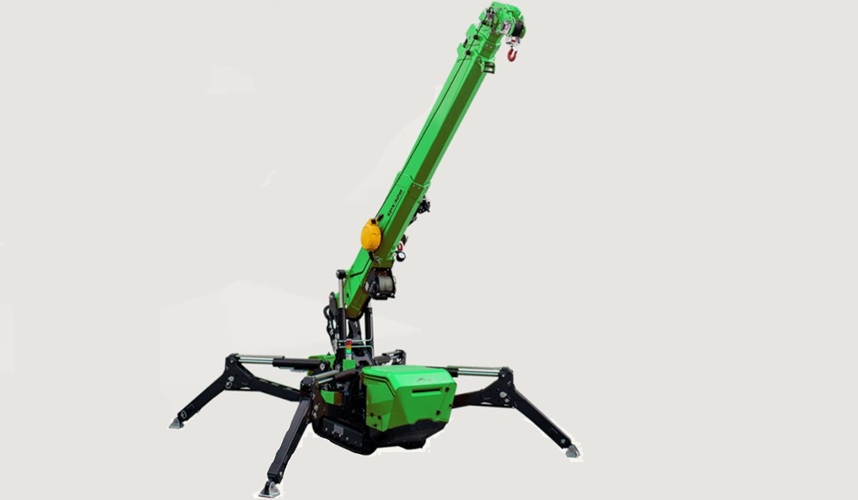
Battery-Powered Cranes – Why Electric Lifting Is Growing on UK Sites
Some modern battery-powered mini cranes can complete a full day’s lifting on a single charge, using the same energy as a domestic kettle running for a few hours.
Construction sites using electric lifting equipment are already operating in areas where diesel machinery is restricted due to emissions rules.
These shifts are not future trends. They are happening now. Across the UK, battery-powered cranes and electric mini cranes are rapidly becoming a preferred choice for contractors looking to reduce emissions, improve efficiency, and work more flexibly on increasingly regulated sites.
At JT Cranes, we are seeing strong growth in demand for electric lifting equipment, particularly in urban construction, refurbishment projects, and indoor installation environments.
Why electric lifting is gaining momentum
The construction industry is under growing pressure to decarbonise. With tighter environmental regulations, sustainability targets, and increasing awareness of air quality on sites, diesel-powered lifting equipment is no longer the default choice it once was.
Battery-powered cranes offer a practical alternative. They deliver the same lifting precision and capability as traditional equipment but without local emissions, noise, or fuel dependency.
In many environments, this makes them essential.
From hospitals and universities to retail spaces and city-centre developments, electric lifting equipment is enabling work to continue in locations where traditional cranes would face restrictions.
What makes battery-powered cranes different?
Unlike conventional diesel cranes, battery-powered models use rechargeable lithium-ion systems to power hydraulic and electric lifting functions.
This brings several key advantages:
- Reduced emissions at point of use, which is particularly important for indoor projects or enclosed environments where air quality is a concern.
- Lower noise. Electric cranes operate far more quietly than diesel alternatives, making them practical for residential areas, hospitals and night-time work.
- Greater operational flexibility. With no need for fuel storage or constant engine idling, electric cranes can be deployed more easily in tight or sensitive environments.”
The role of electric mini cranes on modern sites
Electric mini cranes are leading the way in battery-powered lifting adoption.
Their compact size, combined with zero-emission operation, makes them ideal for restricted access environments where both space and environmental considerations are critical.
Common applications include:
- Internal steel installation
- Glass and façade fitting
- Machinery relocation in factories
- Hospital and clean-room installations
- Urban construction projects with emissions restrictions
Because they can often pass through standard doorways and operate on sensitive flooring, electric mini cranes are becoming a key tool in modern restricted access lifting solutions.
Find out more about JT Cranes’ specialist mini crane hire services and how they support complex lifting challenges.
Sustainability benefits beyond emissions
While zero-emission operation is the most obvious advantage, battery-powered cranes also support wider sustainability goals across construction projects.
Reduced fuel transport and storage requirements help lower overall site logistics emissions. Fewer refuelling movements also reduce disruption and risk on busy sites.
In addition, electric systems typically require less routine maintenance than diesel engines, which can contribute to longer equipment life cycles and reduced waste over time.
As sustainability reporting becomes more important in tender processes, using electric lifting equipment can also strengthen a contractor’s environmental credentials.
Are battery-powered cranes replacing diesel cranes?
Not entirely. But they are reshaping when and where diesel cranes are used.
Heavy-duty lifting, extreme load capacities, and certain remote environments will still require traditional mobile cranes for the foreseeable future.
However, in many urban, indoor, and precision-based applications, electric cranes are becoming the smarter choice.
The future of lifting is not about replacing all diesel equipment. It is about using the right technology in the right environment. Increasingly, that includes electric solutions.
At JT Cranes, we help clients determine when battery-powered cranes offer the best balance of performance, efficiency, and sustainability.
The future of lifting is electric
As construction continues to evolve, electric lifting solutions are moving from niche to mainstream. Battery-powered cranes are no longer experimental. They are proven, practical tools that are already delivering results across UK sites.
With tighter regulations, sustainability pressures, and growing demand for efficient site operations, their role is only set to increase.
For many projects, the question has moved from whether to use electric lifting equipment to when.
Speak to JT Cranes about electric lifting solutions
If you are planning a project and want to explore whether battery-powered cranes or electric mini cranes are right for your site, our team can help.
We provide expert advice on selecting the most efficient and sustainable lifting solution for your requirements, whether that is electric, diesel, or a hybrid approach.
Contact the team at JT Cranes today.